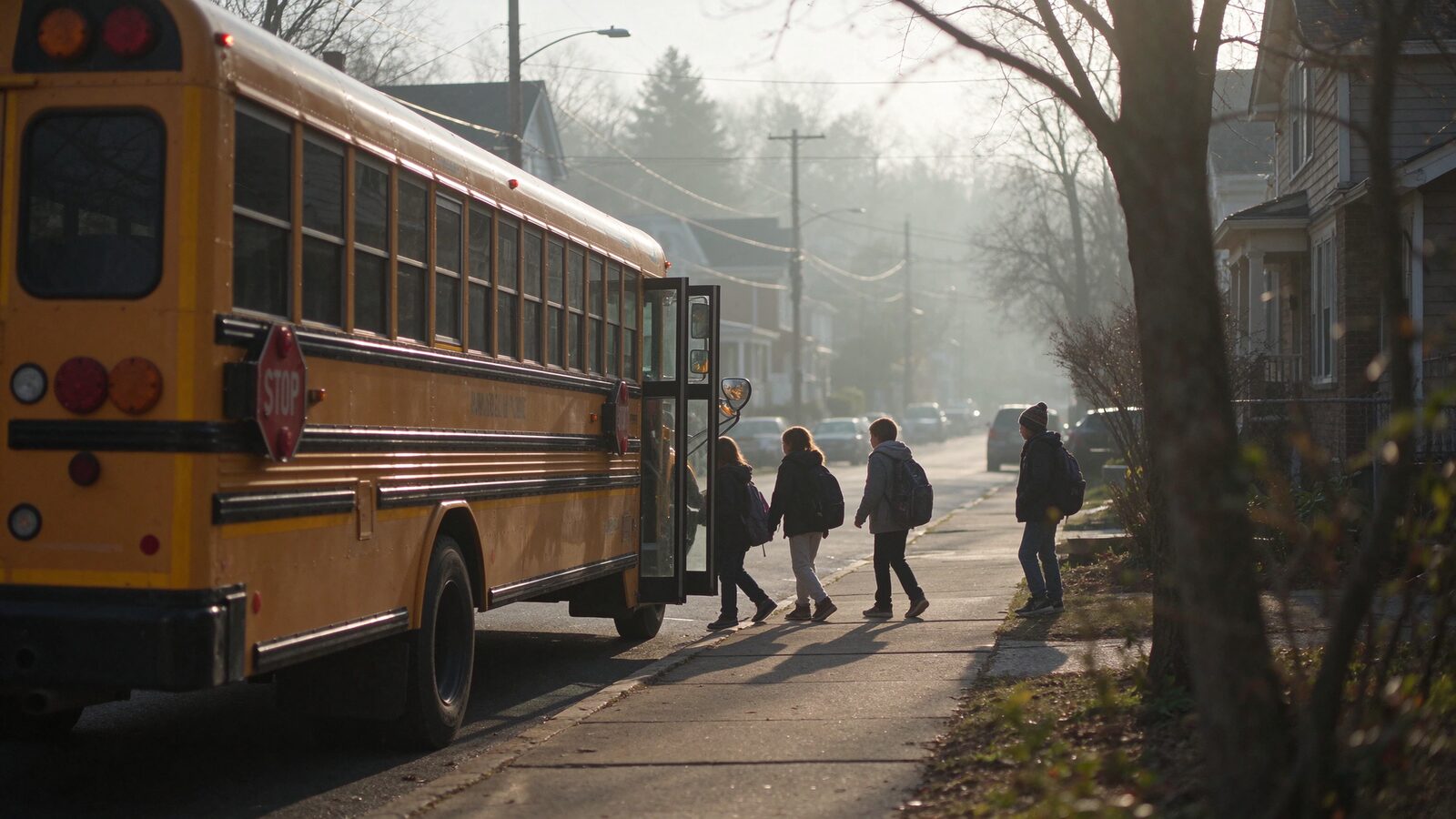
Before the start of the new semester, the bus route was rearranged once, and new areas had to be covered, at the cost of extending the entire route by two kilometers and advancing the boarding time of the first stop students by twenty-five minutes.
For dual-career families, those twenty-five minutes ripple through time out, breakfast schedules, and managed transportation.
Route is resource allocation
The essence of school bus routes is the allocation of time and space: the wider the coverage, the longer the one-way, the more unfair the commuting time of students at the first and last stations.
"For each additional station, someone has to sit ten minutes longer," said the teacher in charge of scheduling.
Some schools try to use the "trunk + feeder" approach to split long lines into short lines and use small vehicles to complete the terminal connections. Costs rise, but commuting time is more balanced.
The education department said it would include the actual commute time of students in the next round of route evaluation, not just the number of people covered.