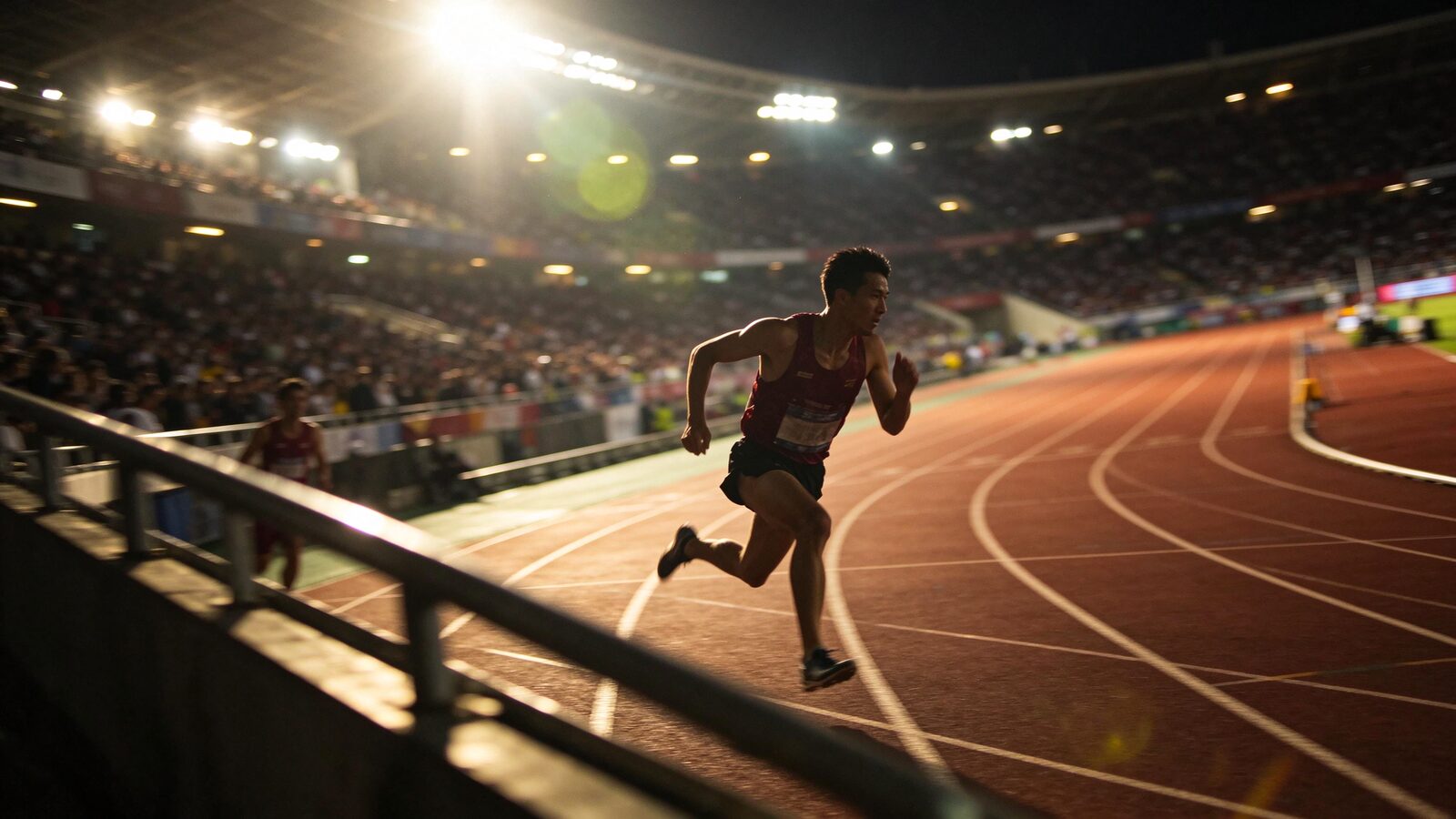
The cheers peaked nine seconds after the shot, then fell into a strange silence-the big screen didn't immediately print the rankings-and the judges walked to the finish camera, where the replay began to advance, pause, and advance again and again.
The controversy arose in the last twenty meters. The center of gravity of the inner lane runners was farther forward, but the torso of the outer lane runners crossed the finish line earlier. According to the rules, the judgment was based on the sequence of the trunk rather than the limbs or feet touching the line, which made the difference almost invisible to the naked eye the core of the judgment.
How technology intervenes
The finish camera system records at thousands of frames per second and produces a sequence of interpretable images along calibration lines. The judges usually compare the torso projections of the two competitors frame by frame by superimposing time scales on the images.
"We're not looking for who's faster, we're looking for who gets there first," explained one referee."These are two different questions."After six replays, the judgment results were announced. The outer runner won by about a thousandth of a second. The inner runner's coaching staff filed a complaint, and the event's technical representative completed the review within fifteen minutes and upheld the original judgment.
There was little communication in the mixed race after the race. The winner said he couldn't feel his leg in the last ten meters,"just knew he couldn't look up first." The loser repeatedly referred to the third step after the start,"that step missed."
Technical officials said the video frame rate was higher than usual because multiple finals were scheduled for the same night,"leaving more data than unclear decisions."